


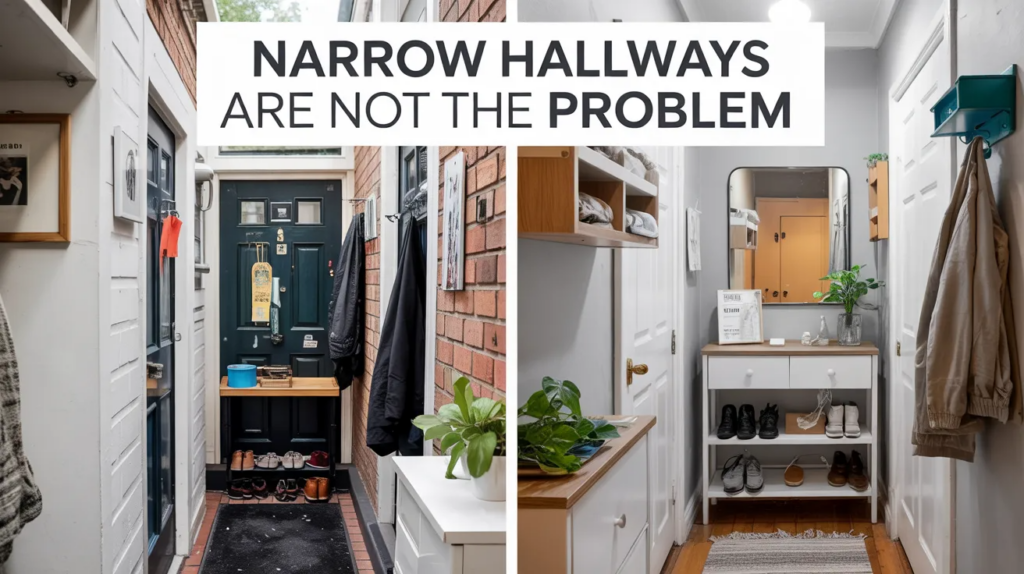
Narrow Hallways Are Not the Problem | Wasted Wall Space Is
People usually think narrow hallways should stay empty.
“It’s already tight, adding furniture will just make it worse.”
So the space stays bare.
Just a walkway from one room to another, nothing more.
And over time, it starts to feel like a missed opportunity.
But here’s the thing.
The hallway isn’t too small.
The real problem is that the walls aren’t being used at all.
You can walk through a narrow hallway that feels cramped and awkward,
and then another one, just as narrow, that somehow feels useful and calm.
The difference usually comes down to one thing.
Whether that space is working for you or just being passed through.
Why Empty Hallways Don’t Always Feel Better
The instinct to leave a hallway empty makes sense at first.
More space should mean easier movement.
But in reality, empty doesn’t always mean better.
A completely bare hallway can feel unfinished.
There’s nowhere to place anything, no surface for everyday items, no sense of structure.
So small habits become inconvenient.
Keys end up in random places.
Mail gets dropped wherever there’s space.
The hallway stays clear,
but it doesn’t really help you.
What Most People Don’t Realise About Wall Space
What most people don’t realise is that even narrow hallways have usable space.
It’s just not on the floor, it’s along the wall.
That’s where things start to change.
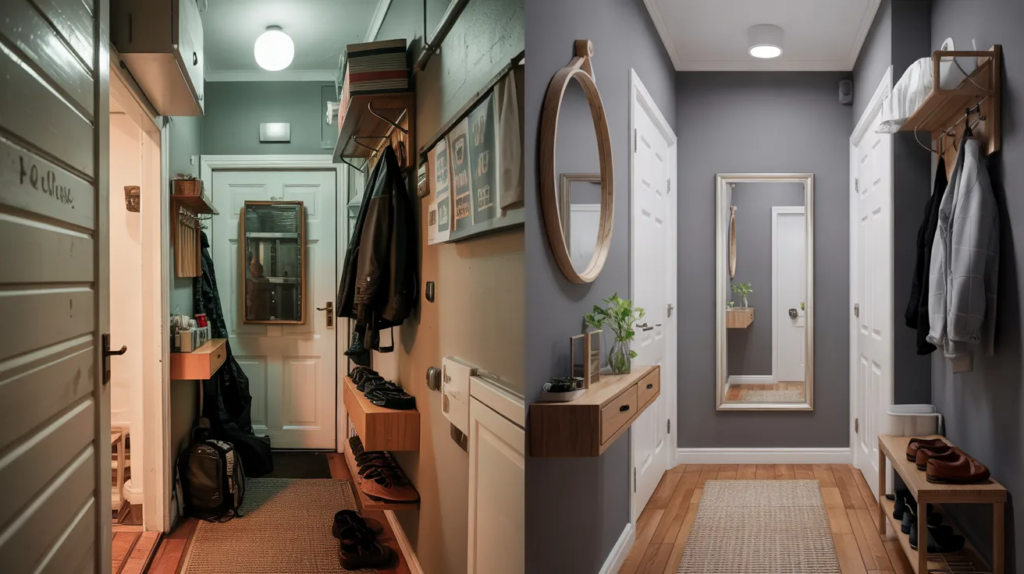
A slim Console Tables design doesn’t take much depth..
It sits close to the wall,leaving most of the walkway untouched similar to Slim Side Tables.
You’re not reducing movement space in a meaningful way.
You’re just using a part of the room that was already there.
And once that happens, the hallway starts to feel more intentional.
Why Console Tables Work Surprisingly Well Here
Console tables are built for this kind of space.
They’re narrow by design.
They don’t push into the room the way larger furniture does unlike bulkier Shelving Units.
In a hallway, that matters more than anything.
You can place one along the wall and still walk past it comfortably.
But now, you also have a surface that didn’t exist before.
A place for keys, a bag, or even just something simple like a lamp.
It’s a small addition,
but it changes how the space functions.
Slim vs Standard Console Tables (And What Fits Better)
Not all console tables work in narrow hallways.
Standard ones can still be too deep, especially in tighter layouts.
They look fine, but they make movement feel slightly restricted.
Slim console tables, on the other hand, are designed with this exact problem in mind.
They provide just enough surface without getting in the way.
They don’t try to do too much.
That balance is what makes them work.
It’s not about adding furniture.
It’s about adding the right kind.
Where Placement Makes the Biggest Difference
Placement matters more than people expect.
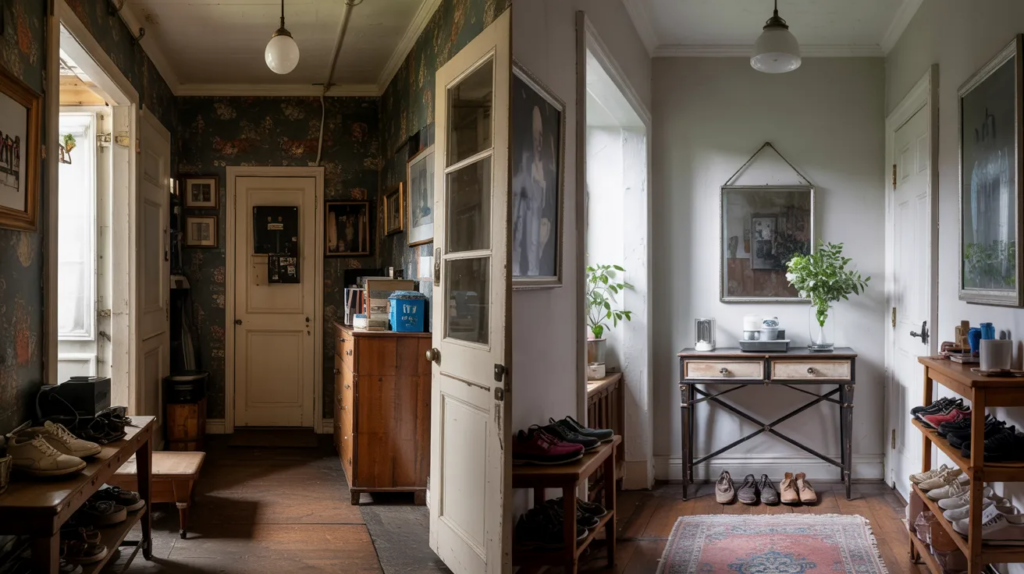
A console table right near the entrance works differently than one placed halfway down a hallway or even using Ladder Shelves.
Near the door, it becomes a drop zone.
A place to leave things without thinking.
Further inside, it can act more like a visual anchor.
Something that makes the space feel less empty.
I’ve seen narrow hallways that felt awkward simply because nothing broke up the space.
Then one table was added, and suddenly it felt more balanced.
Not bigger.
Just better used.
Why Small Additions Change How a Space Feels
This is the part people don’t always expect.
A console table doesn’t transform a hallway dramatically.
It doesn’t make it wider or larger.
But it changes how you interact with it.
You stop seeing it as just a passage.
It becomes part of how your home works day to day.
And those small shifts add up.
The space feels more complete,
without ever feeling crowded.
Before choosing a final door system, it is worth looking beyond style, smart locks, or keyless access alone. Reviewing secure front doors can help homeowners understand whether the property needs stronger physical protection.
Final Thought
If a narrow hallway feels like it can’t be used for anything,
it’s usually not because of its size.
It’s because nothing has been placed there with intention.
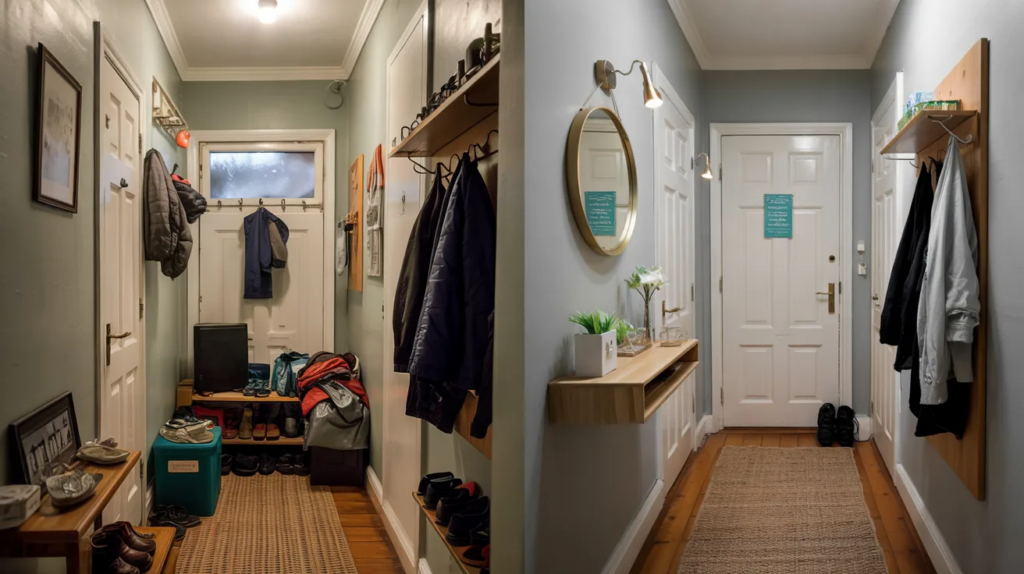
And sometimes, something as simple as a slim console table
is enough to make that space finally make sense sometimes alongside Floating Shelves.