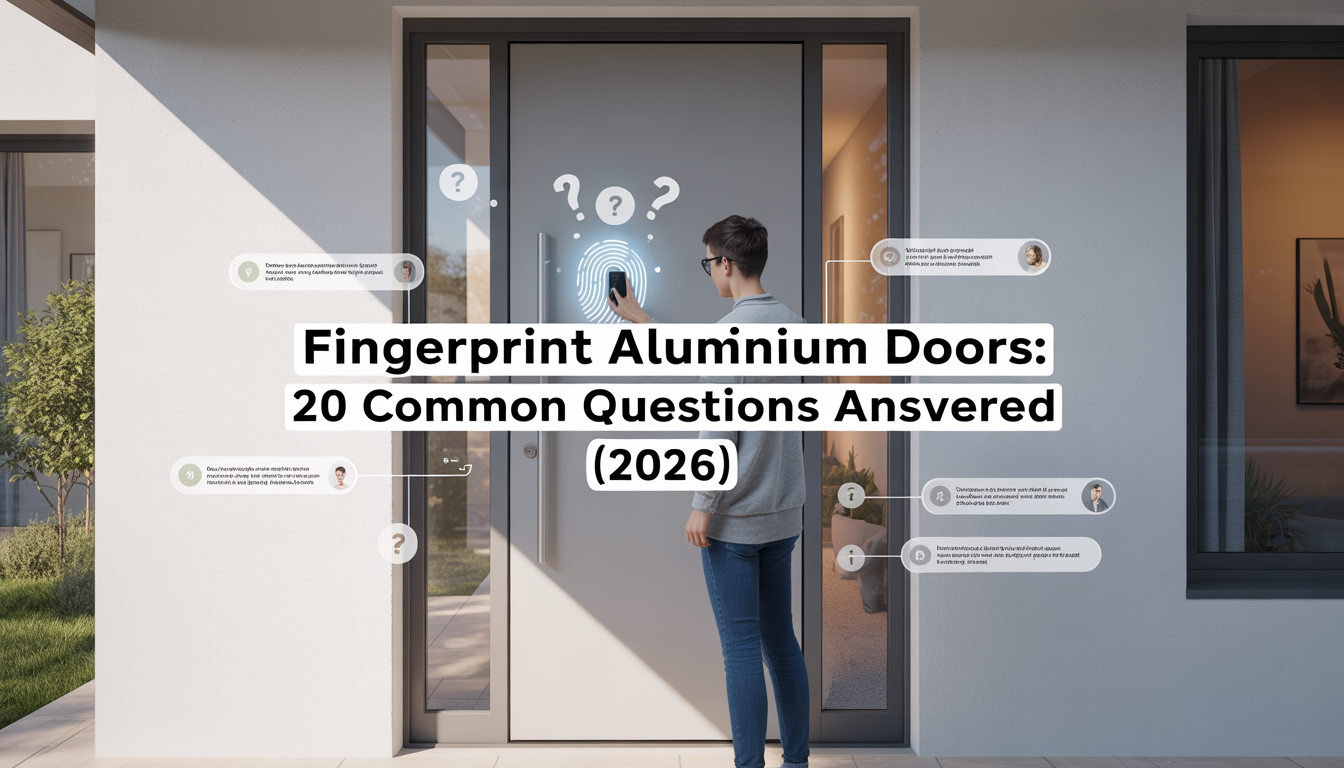


Fingerprint Aluminium Doors for Homes, Offices & Luxury Properties
The pitch for fingerprint aluminium doors is usually security. Security matters, but it isn’t what people actually live with day to day.
What people live with is the small, cumulative friction of keys: the school run, the bag of shopping, the late night arrival, the lost set, the awkward handover to the dog walker. A biometric door isn’t really a security product. It is a friction removal product that happens to be very secure.
If you’re new, start with the fingerprint aluminium door beginner guide
Here is what that looks like across different settings.
For a full breakdown before choosing, see the fingerprint aluminium door buying guide
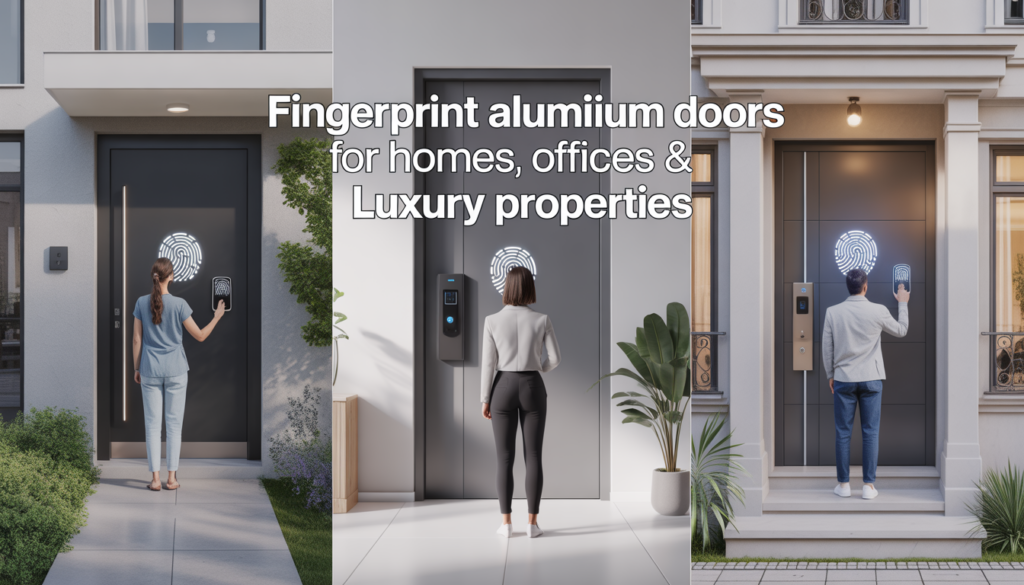
The family home
Picture the standard scenario: one parent, two children under ten, a car full of shopping bags, and a front door that needs unlocking. Keys are buried in a handbag. The toddler has decided to lie down on the path. The bags are slipping. The neighbour is watching.
A fingerprint door turns this into one motion. Touch, push, in. No bag juggling, no key fumbling.
Multiply that across school runs, sports kit, prams, dog leads, and food deliveries, and the case writes itself.
For families with older children, the audit log replaces the daily “are you home yet?” text. The phone tells you when your teenager came in, automatically, without anyone having to remember to send a message.
And for the question every parent eventually faces when is my child old enough for a key the answer changes. They don’t need a key. You enrol their finger. There is nothing to lose, nothing to copy, and nothing to find on the kitchen floor.
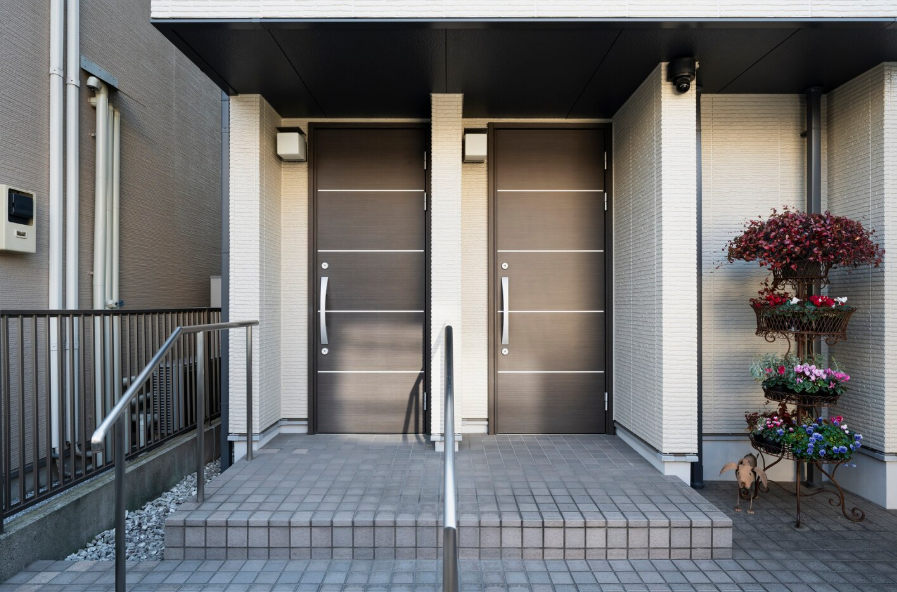
Offices and small commercial premises
For small offices, studios, clinics and consultancies, fingerprint aluminium doors solve a problem that has dogged commercial property forever: who has a key, and who shouldn’t.
Staff turnover usually means keys go missing. Or they don’t get handed back. Or they get copied. The traditional response is to rekey the whole building, which is expensive and never gets done as often as it should.
With a biometric door, an employee leaving means deleting one entry from the user list. Done. No rekeying, no replacement keys, no awkward conversations about “did you give yours back?”.
The audit log also provides quiet accountability. Who unlocked the office at 7am? Who came in over the weekend? Who entered the consulting room outside hours? It is not surveillance, it is just a record, available when needed.
Cleaners, contractors and delivery drivers can be given temporary fingerprint slots or one time codes that automatically expire. No more cleaner keys floating around for years.
Luxury and high net worth properties
At the upper end of the residential market, the design conversation matters as much as the security one. Architects increasingly specify fingerprint aluminium doors for new builds and major renovations because they look correct on a contemporary façade in a way that traditional doors do not.
See real examples here: real fingerprint door projects and case studies
Slim aluminium sightlines, a single uninterrupted panel finish, no visible lock or letterbox break this is a different aesthetic from a panelled composite door. The technology disappears.
For larger properties with multiple staff housekeepers, gardeners, security, personal assistants the management benefits scale up. Each individual is enrolled once with a defined access window. Comprehensive logs satisfy private security requirements without anyone needing to track key custody manually.
For properties with separate guest accommodation, gym buildings, garden offices or pool houses, the same biometric platform can secure all of them. One finger, every door.
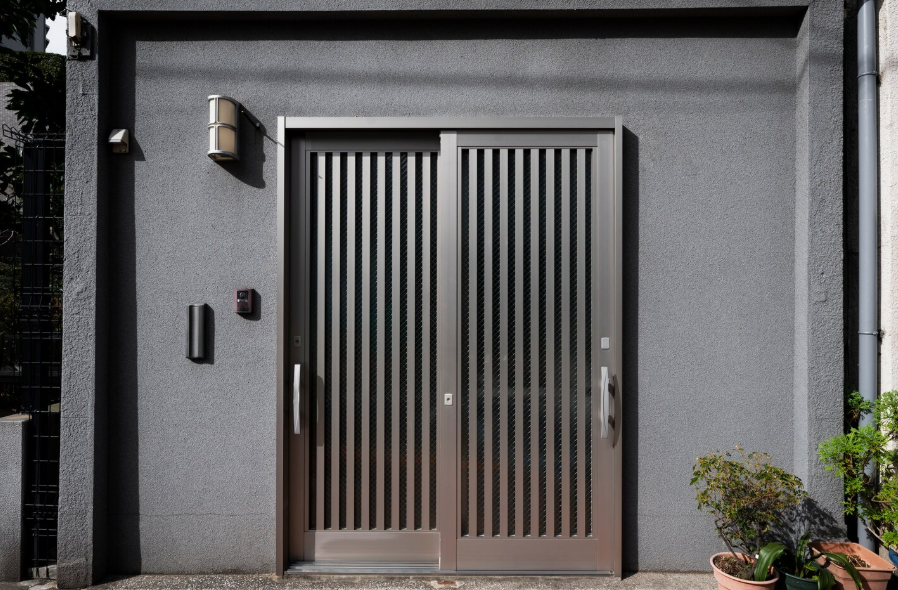
Holiday lets and second homes
Short term rental hosts have a chronic logistics problem: how to get keys to guests who arrive at unpredictable times.
See how this works in practice: fingerprint door solutions for holiday lets
The answers lockboxes, meet and greet services, and hidden keys are all compromises.
A fingerprint aluminium door with app based code generation solves this cleanly. The host generates a one time access code or a time limited fingerprint slot for each booking, valid only between check in and check out. The guest gets the code by message before arrival. When their stay ends, access ends automatically.
Owners of second homes get the same benefit. You can let a contractor in remotely, watch the door log update on your phone, and lock everything down again from another country.
Smart home integration
A modern fingerprint aluminium door doesn’t sit in isolation. It becomes one node in a connected home.
Learn more about this: smart home integration for fingerprint doors
Common integrations include:
- Lights on arrival. When a recognised fingerprint unlocks the door at dusk, hallway and living room lights come on automatically.
- Heating and HVAC. Holiday mode setbacks lift the moment the door registers an authorised entry, so the house warms up as you arrive home.
- Alarm system. Disarming the alarm and unlocking the door become a single action, ending the awkward keypad rush.
- Cameras and video doorbells. The door log and the doorbell footage cross reference, so you can see who entered and what they were doing.
- Voice assistants. “Alexa, is the front door locked?” gets a real answer.
The integrations are optional, and most owners use a few rather than all of them. The point is that the door speaks the language of the rest of the smart home, rather than being a closed product.
Older homeowners and accessibility
A quietly important use case. For older homeowners, arthritic hands, reduced grip strength, and the difficulty of manipulating small keys in cold weather can turn the front door into a daily obstacle. A fingerprint sensor and a motor driven lock removes all of that. Touch, and the door opens.
For family members of older relatives, the ability to be enrolled as an authorised user without needing a physical key handed over makes regular visits and emergency access far easier.
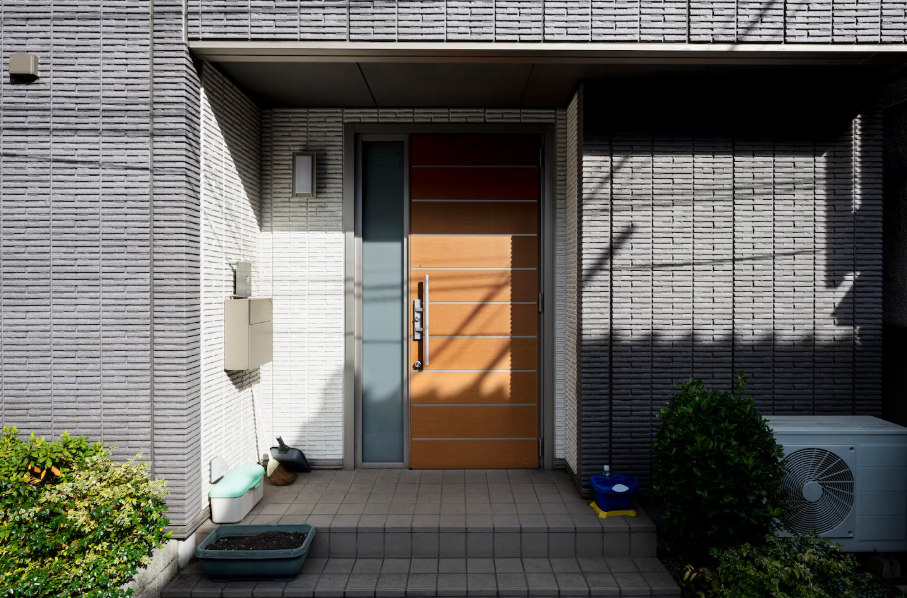
Before choosing a commercial entrance, businesses should compare convenience, durability, and physical resistance together. Reviewing high security entrance doors can help identify whether a stronger system is needed for long-term protection.
What to think about when choosing for your context
Different contexts pull in different directions:
- Family home: prioritise robustness, simple user management, and a generous fingerprint capacity.
- Office: prioritise the audit log, temporary access controls, and integration with existing access control systems.
- Luxury residence: prioritise design, finish options, and multi door system management.
- Holiday let: prioritise remote code generation, automatic expiry, and ease of use for non technical guests.
- Older homeowners: prioritise sensor reliability, large/clear visual feedback, and a straightforward backup method.
The underlying technology is largely the same. The difference is what the supplier helps you set up around it.
FAQ
Can the same door be used at home and in a small office?
Yes. The hardware is identical; the user management policies you apply are different.
How many fingerprints can a door store for an office?
Most systems hold 100–200 templates, which covers small to mid sized teams comfortably.
Can I give a guest temporary access without enrolling their fingerprint?
Yes. Most systems support time limited PIN codes or app generated one time access.
Does a fingerprint door work with Apple Home or Google Home?
The better systems support one or both, plus Alexa. Confirm with the manufacturer before buying.