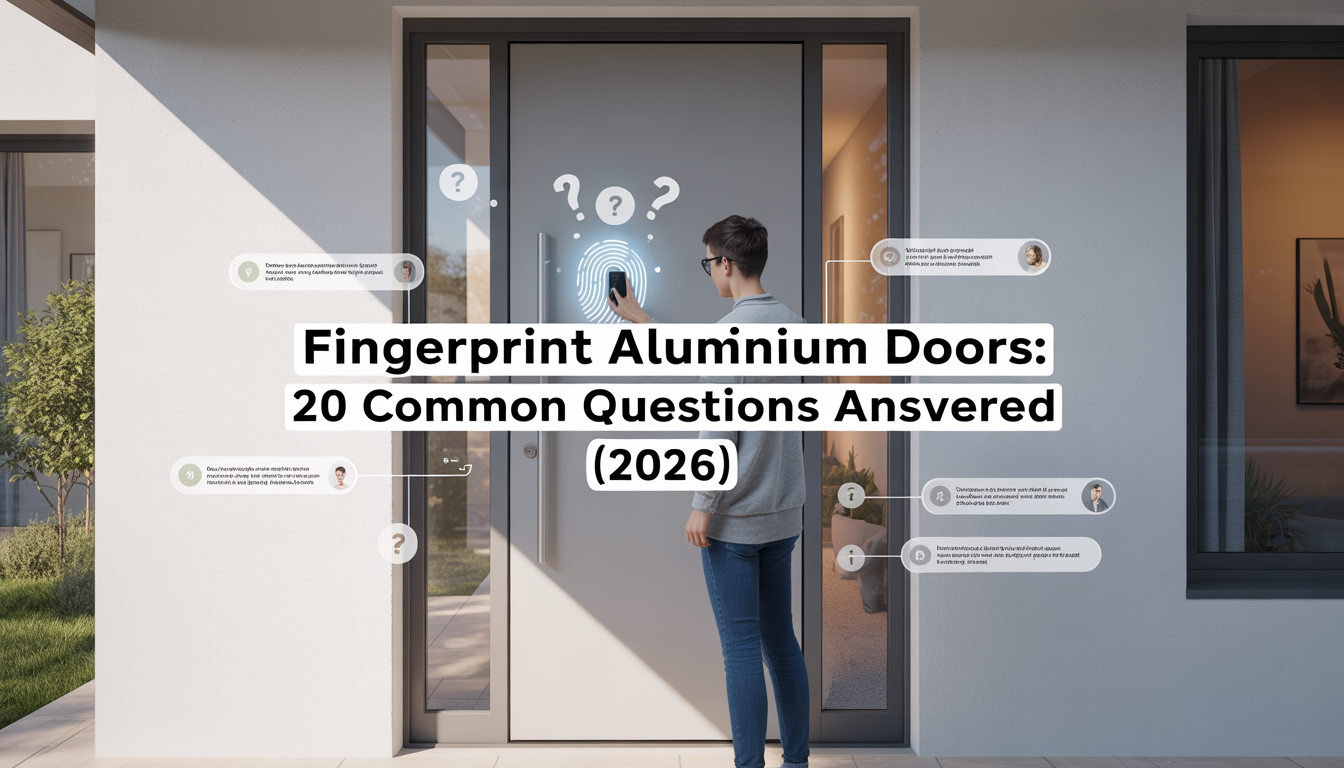


Fingerprint Aluminium Doors Explained: How They Work & Why They’re Replacing Keys
A fingerprint aluminium door is an entrance door built from a thermally broken aluminium frame and panel that opens when an authorised user places their finger on a built in biometric scanner. There is no key, no fob, and no cylinder that can be picked or snapped. The door reads the unique pattern of ridges on your fingertip, matches it against an encrypted template stored locally in the door, and unlocks within a fraction of a second.
If you have used the fingerprint sensor on a smartphone, you already understand the principle. Learn more in our fingerprint aluminium door beginner guide
The difference is that the same technology is now engineered into the front entrance of a home paired with the strength, weather resistance and slim sightlines that aluminium is known for.
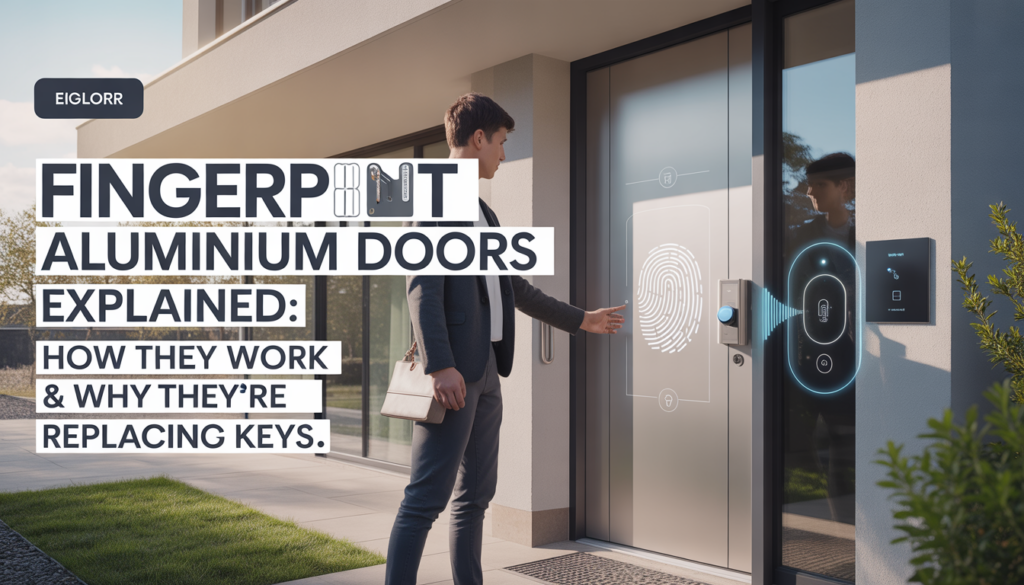
What is a fingerprint aluminium door?
A fingerprint aluminium door has three main parts:
The aluminium door itself is a rigid, insulated panel set into a thermally broken aluminium frame. Aluminium is chosen because it is strong, lightweight, doesn’t warp, doesn’t rot, and can be powder coated in any RAL colour with a finish that lasts decades.
The biometric reader is usually a small capacitive or optical sensor mounted in the handle, the door edge, or a flush panel beside the lock. It captures the fingerprint and converts it to a mathematical template.
The smart locking system is a multi point motorised lock that drives several bolts into the frame at once when the fingerprint is verified. Many systems also include a smartphone app, a numeric keypad as backup, and a mechanical override key hidden for emergencies.
Learn more in our fingerprint aluminium door beginner guide

How a fingerprint door actually works
The process feels instant, but several things happen in sequence.
When you place your finger on the sensor, it captures an image of the ridges and valleys on your fingertip. That image is immediately converted into a numerical template, a string of data points unique to your finger. The original image is discarded; only the template is stored, and it is encrypted.
The door then compares the new scan against the templates of every authorised user. If it finds a match, the motorised lock retracts the bolts and the door is free to open. If it doesn’t, nothing happens, and after several failed attempts the door typically locks down for a set period.
Templates are stored locally inside the door’s controller, not in the cloud. That matters: even if your home Wi Fi is offline, the door still works.
Why people are choosing biometric over traditional locks
The shift away from keys is being driven by a few real world frustrations.
Keys get lost, copied, lent out, and forgotten. A fingerprint cannot be left in a coat pocket or dropped at the gym. You cannot lock yourself out of your own house unless you also lose your finger.
Traditional euro cylinder locks remain the most common point of attack on UK front doors. Lock snapping, bumping and picking are well documented techniques. See biometric door security and technology explained
A motorised multi point lock with no external cylinder simply removes the target.
Biometric doors also create an audit trail. The app shows you who entered and when useful if you have cleaners, dog walkers, tradespeople, or family members coming and going.
And because aluminium frames can be made very slim, fingerprint doors tend to look more architectural than a traditional composite door. The technology disappears into the design.
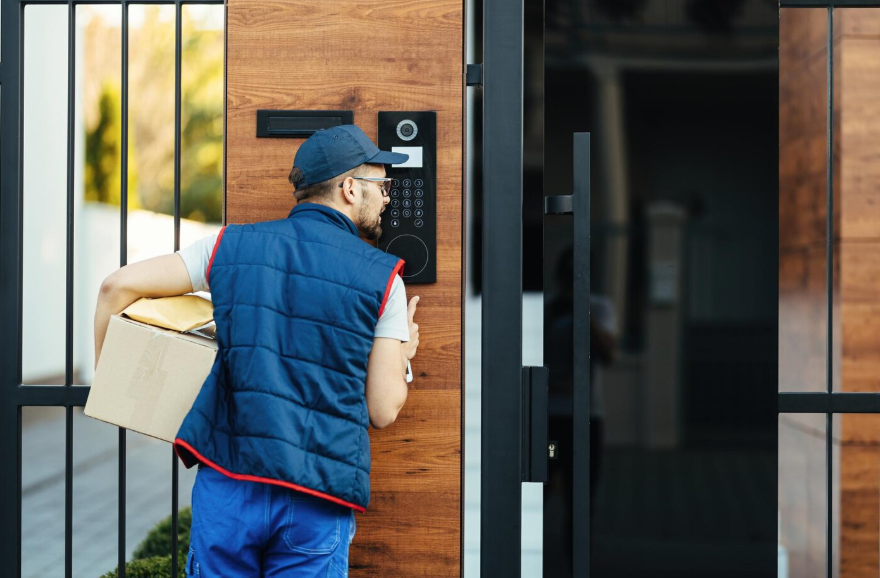
Benefits at a glance
- No keys to lose, copy or hand over. Each authorised user is enrolled once.
- Faster entry. A scan and open cycle is usually under a second.
- Stronger physical security. Multi point motorised locking, no exposed cylinder.
- Remote control. Most systems pair with a phone app so you can lock, unlock or check the door from anywhere.
- Audit trail. See exactly who came in and when.
- Weatherproof and low maintenance. Aluminium doesn’t rot, warp or need repainting.
- Multiple backup methods. Keypad, app, fob and mechanical key are usually all available.
Explore options :configure your fingerprint entrance door
Are there any downsides?
Honestly, two worth knowing about.
The first is cost. A premium fingerprint aluminium door is more expensive upfront than a standard composite door. The technology, the motorised lock, and the aluminium fabrication all add to the price.
The second is power. The lock needs electricity. Reputable systems run on mains power with a battery backup that holds the door operational for days during an outage, and every quality system also includes a mechanical key override for absolute worst case scenarios. But it is something to be aware of if you are comparing it to a purely mechanical door.
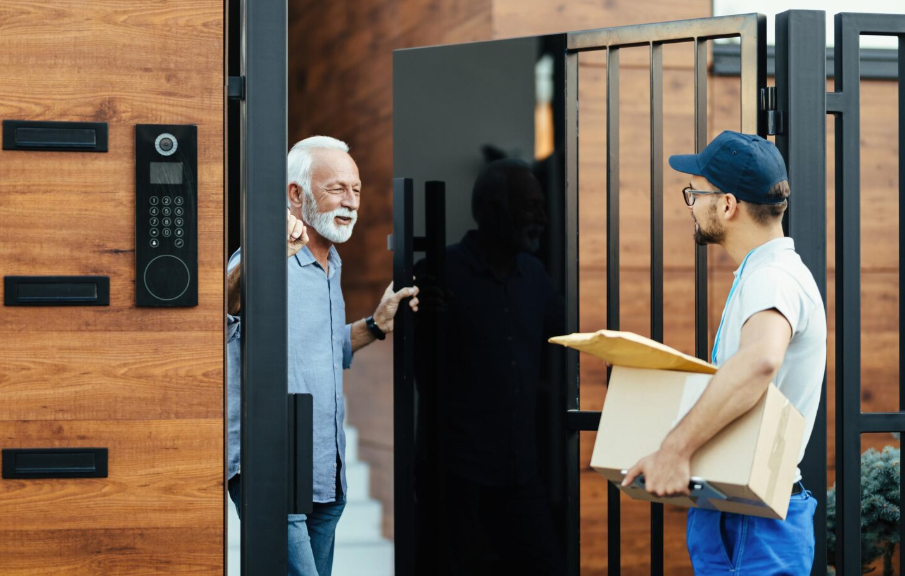
The safest choice is usually the one that matches the property’s real risk level, daily access needs, and long-term plans. Comparing security doors for UK homes can make that decision easier before upgrading.
Is a fingerprint aluminium door right for you?
If you want a front door that looks contemporary, eliminates the daily annoyance of keys, gives you remote visibility of your home, and meaningfully upgrades your physical security, yes. Take the next step: request a sample or showroom visit
If you only ever leave through your front door once a week and price is the main driver, a standard door might still make sense.
For most homeowners replacing a tired front door, the long lifespan of aluminium combined with the everyday convenience of biometric entry makes the maths work.
FAQ
Do fingerprint doors work in the rain or cold? Yes. Quality biometric scanners are weather rated and operate reliably across normal UK climate conditions, including rain, frost, and direct sun.
How many fingerprints can the door store? Most systems hold between 50 and 200 fingerprints, more than enough for a household.
What happens if the power goes out? Battery backup keeps the door operational for several days. A concealed mechanical key provides a final override.
Can someone copy my fingerprint and unlock the door? Modern sensors detect liveness; they look for a real, warm, ridged finger, not a flat copy. The risk is extremely low for a residential front door.