

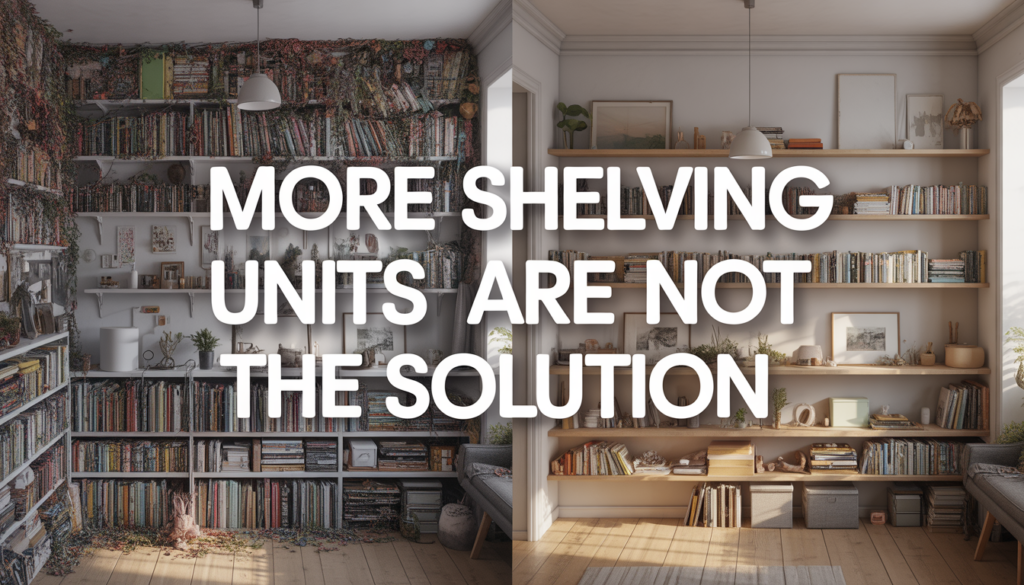
More Shelving Units Are Not the Solution | Poor Storage Thinking Is
People usually say the same thing when a space feels messy.
“I just need more storage.”
So they add another unit.
Maybe a bigger one this time. Something with more shelves, more sections, more capacity sometimes replaced with simpler options like Rustic Floating Shelves.
At first, it feels like progress.
Things get organised, surfaces clear up, and the room looks better for a while.
But then, slowly, the clutter comes back.
And somehow, the space feels even heavier than before.
But here’s the thing.
It’s rarely about how many shelving units you have.
The real issue is how those shelves are working with your space, not just how much they can hold.
Why Adding More Storage Often Backfires
The problem is, most people treat storage like a numbers game.
More shelves should mean more organisation, so the solution feels obvious especially when switching to Rustic Oak Shelves.
But in reality, adding more units often just spreads things out instead of solving anything.
You end up with items placed across different shelves, different corners, different heights.
Nothing feels grouped, and nothing feels easy to reach.
And visually, it starts to show.
The room feels broken up.
Walls look busy.
The floor space gets tighter without you noticing it at first.
What was meant to fix clutter quietly turns into a different kind of clutter.
What Most People Don’t Realise About Good Storage
What most people don’t realise is that good storage isn’t about capacity.
It’s about clarity.
A well placed shelving unit doesn’t just hold things.
It creates structure in the room.
That’s where things start to change.
Instead of asking “How much can this store?”
you start asking “How will this organise what I already use?”
That shift makes a bigger difference than the size of the unit itself.
Why Placement Matters More Than Size
A large shelving unit can look impressive, but if it’s placed without intention, it quickly becomes overwhelming.
I’ve seen rooms where a full wall unit takes over everything.
It stores a lot, but it also dominates the space completely.
Then you see another setup with a smaller, more focused storage unit placed exactly where it’s needed.
Near a workspace, beside a seating area, or along a wall that would otherwise go unused often complemented by Console Tables
And somehow, that smaller setup works better.
Not because it holds more.
Because it makes more sense.
Open Shelving vs Closed Units (And Where Each Works)
There’s always a choice between open shelving and closed storage, and most people lean too far in one direction.
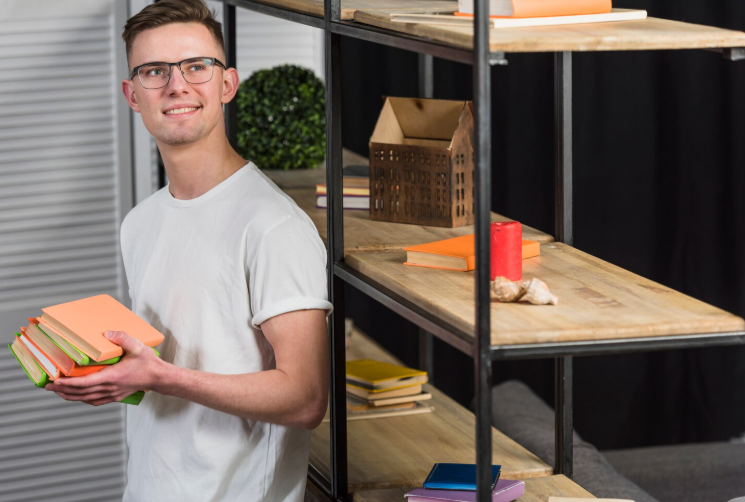
Open shelving units make things visible and accessible.
They work well for everyday items, books, or pieces you use often.
But they also require a bit of discipline.
Too many items, and they start to look cluttered.
Closed units hide everything away.
They create a cleaner look, but they can also make things harder to access.
The balance usually works best.
Use open shelves for what you reach for daily.
Use closed storage for what you don’t need all the time.
That way, the space stays both practical and calm.
How Different Types of Shelving Units Change a Room
Not all shelving units behave the same way, even if they serve the same purpose.
Tall vertical units draw the eye upward and can make a room feel higher, but they need to be placed carefully so they don’t feel overpowering.
Lower, wider units feel more grounded.
They can double as surfaces for lamps, decor, or everyday items.
Then there are lighter designs, llike open frame or Ladder Shelves.
These feel less intrusive and work better in smaller spaces where visual weight matters.
The choice isn’t just about storage.
It’s about how the unit interacts with everything around it.
Why Less Storage Can Actually Feel Better
This sounds counterintuitive, but it’s something you notice once you try it.
When you limit your storage space, you naturally become more selective about what stays.
You stop filling shelves just because there’s room.
You start keeping what actually matters or gets used.
And because of that, the shelves themselves start to look cleaner.
More intentional.
It’s not about having less.
It’s about having just enough, in the right place.
A front door upgrade should be judged by more than appearance or access method. Comparing high security entrance doors can help homeowners understand whether a stronger door structure is needed for better long-term security.
Final Thought
If a space still feels cluttered after adding more shelving units,
it’s probably not a storage problem anymore.
It’s a layout and usage problem.
And once you start thinking in terms of placement and purpose,
even a single well chosen unit can do more than several added without a plan especially when paired with Coffee Tables.